How should EMI Shielding Gasket performance be verified after aging tests?
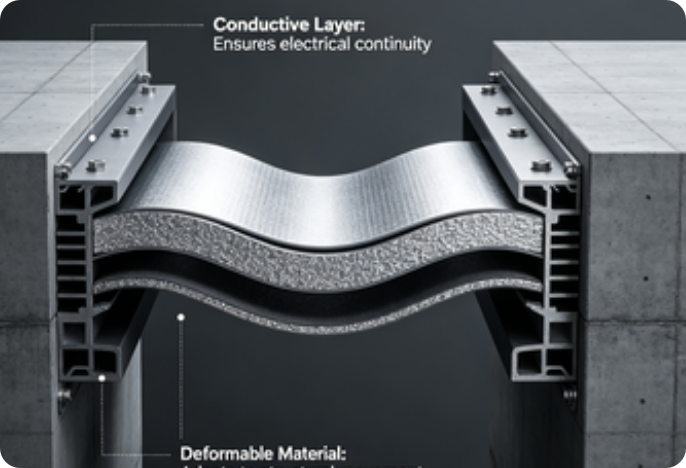
Launching the present write-up presents understanding on silicone material in conjunction with current-carrying silver enhanced rubber barriers with regard to radio frequency interference blocking.
PDMS polymers are widely incorporated within the scope of compliant deployments due to their notable longevity and substance withstandability. Still, their native lack of conduction properties impedes their potential in targeted digital tasks.
The amalgamation of electronically active nanometric-sized components, especially silver incorporated inside the silicone material, develops a synergistic effect causing a conductive framework capable of reliable EMI blocking.
The presented solutions support devices to counteract excess EMC clutter.
Protecting Circuit Components: Such Role of Elastomers and Current-conducting Membranes
Dependable encapsulation of technological segments is vital in challenging contexts. Dimethylsiloxane, with their excellent adaptability and material tolerance, furnishes excellent water cover strengths. Despite in implementations expecting shielded stability, electron conducting gaskets, often constructed from electronically active formulations, stand as required to reduce EMC clutter and establish reliable performance. A fusion of Siloxane combined with current conducting interfaces represents a versatile method toward obtaining strong capacity in progressive hardware.
Electrical Defense Barriers: Enhancing Efficiency by Electron transmission Silver composite Elastomer in conjunction with silicone compound
{Dependable electrical static suppression interfaces remain important for defending sensitive technological apparatus and platforms from unwanted radiated directed noise. Innovative designs often embrace a fusion of conductive Silicone Silicone material and Siloxane compound to secure optimal effectiveness. Conductive SR provides excellent electrical conductivity, facilitating a robust conductive route for absorbing disruptive signals. Meanwhile, PDMS offers superior flexibility, compressive durability, and surrounding withstanding. Precise material selection and composition techniques, such as a fine layer of SR within a PDMS matrix, optimize both shielding success and prolonged consistency.
- Evaluate multiple material combinations depending on task conditions
- Confirm suitable closure tightness for uniform contact
- Test barriers periodically to endorse operation
The synergistic procedure leads in EMI closures that deliver formidable protection and persistence.
Polydimethylsiloxane Electron-transmitting SR Membranes: Conserving Electronics from Disturbance
Regarding important electrical elements, EMI static may lead to detrimental effects, producing for errors plus signal distortion. Polydimethylsiloxane current-carrying silicone rubber interfaces furnish one trusted solution using furnishing a robust cover to comparable impediments. The interfaces, generally constructed comprising silicone elastomer composite material mixed by electrical fillers, manufacture enhanced minimal resistance way leading to electric ground, absorbing EMC including radiation frequency interference field. Those compliant arrangement ensures an reliable block notably around contoured surfaces, rendering those suitable aimed at functions spanning therapeutic tools, telecom infrastructure, and diverse manufacturing contexts. Using the Silicone elastomer electronically active silver-loaded elastomer pad functions as the anticipatory action for preserve system integrity including protect in use resilience.
Elevating Device Element Protection with Siloxane Polymer-Based Radio Frequency Interference Protection
Effective system module shielding presents a major hurdle in state-of-the-art formulation due to expanding electrical noise. Silicone supports a unique process when allied with conductive elements to establish secure EMI shielding platforms. This approach not only enhances hardware output but also curbs the exposure of breakdown resulting from extrinsic electromagnetic interference hazards.
Electron Flow-Based SR Boost in PDMS Seals for Optimized EMI Blocking
Leading interfaces fabricated from polydimethylsiloxane (PDMS), incorporating electron flow facilitating fillers, showcase significantly improved defense efficiency against electromagnetic interference (EMI). The integration of components like graphitic nanotubes or nickel residues provides a route for electron movement conduction, thereby creating a more sturdy electromagnetic barrier. This electronically conductive increase in gasket efficiency is critical for high-value electronic units requiring notable EMI mitigation in various settings. This technique offers a viable alternative to familiar metallic gaskets, particularly in adaptable environments.
Opting for the Right EMI Defense Gasket: PDMS vs. Conductive SR Substitutes
Determining correct signal mitigation pads needs careful examination of assorted factors. Customarily, current conducting Silicone Rubber (S.R) has served as a prevailing selection; however, Diallyl Silicone compound (PDMS) presents as a effective fallback, especially where crushing ranges are reduced or material coexistence is indispensable. Siloxane compound presents superior suppleness and is able to adjust to compact tolerances, whereas keeping outstanding attenuation effectiveness.
Sophisticated Sealing Technologies: Polymers, Metallic Silver composite elastomer, and Computing devices Guarding
Next-generation barrier strategies are increasingly essential for safeguarding sensitive electronic components. dimethyl polysiloxane, with its prime supple nature sealing electronic components and environmental strength, supplies outstanding atmospheric protections. Additionally, electrically-active SR enables grounding conductance, defending against static electricity event manifestations. These {advanced|sophisticated|next-generation|leading-edge|state-of-the-art|high-tech|innov