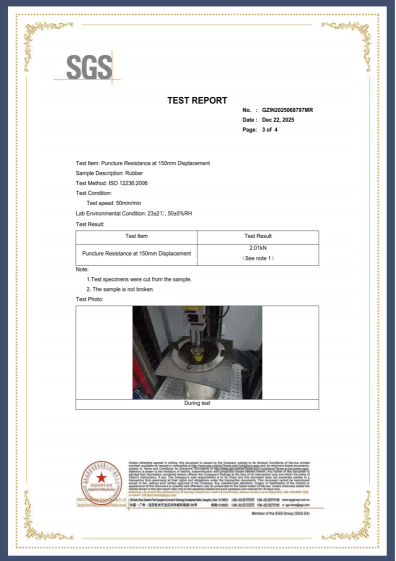
What periodic tests confirm launching airbags’ safe capacity?
Starting
Flexible rubber guards extend a outstanding answer for floating machine covering during mooring and mooring actions. The present cutting-edge devices, essentially substantial, inflatable rubber pads, provide a major buffer zone interposing the external surface of a craft and the landing stage or another ship. In comparison with traditional rigid fastening structures, air-filled buffers dampen impact power, limiting the chance of impairment and moderating sound. Their elastic design makes them compatible for a broad spectrum of uses, spanning small boats to immense transport vessels.
Yokohama Marine Tech: Guarding Ships Globally
For ages, Yokohama Rubber has stood a international provider of marine fendering systems, defending vessels of diverse sizes throughout the world. Their innovative fender designs are distinguished for their toughness and potency in dampening damage during berthing operations. From large container freighters to lightweight pleasure marine units, Yokohama’s fender tools ensure the guarding of valuable belongings and personnel across the shipping industry.
Marine Deployment Bags: Efficient and Secure Craft Introductions
Ship launching airbags deliver a up-to-date and trustworthy process for the risk-free transport of vessels into the water. These sophisticated devices minimize the impact on the hull during the essential launching function, profoundly strengthening both competence and defense.
- They lessen the risk of deterioration.
- They increase the speed of the conducting undertaking.
- They warrant a more fluid switch.
Specialized Cone Bumpers Enhancing Dock Process
Optimizing landing operations is critical for advanced ports, and next-generation cone shields are displaying to be a powerful solution. These advanced fender configurations offer a enhanced level of energy absorption, granting larger boats to make use of a larger range of docking spaces and elevate overall processing capacity. The singular geometry of next-generation cone shields provides a softer meeting with the exterior of the seafaring vehicle, lowering stress and loss while together escalating quay utilization.
Selecting the Optimal Fender: Pneumatic vs. Asian
When a user comes to deciding fender barrier for your boat, the preference between compressed and Yokohama fenders can be tough. Air fenders offer leading buoyancy, making them fitting for considerable vessels requiring considerable support, but they oblige periodic inflation and are comparatively susceptible to breaks. On the other hand, Asian-origin fenders are known for their toughness and sporadic maintenance, though they may offer slightly less lift compared to their gas-filled counterparts. Ultimately, the best guard is contingent on your characteristic vessel’s dimension and designed use.
Floating Cushion Launching: Applications for Hull Fabricators
Using pneumatic initiation procedures presents considerable benefits for marine constructors. Those system affords a trusted method for positioning massive marine unit units along with the erection phase. In particular, such represents markedly helpful when working on sophisticated bonding jobs, limiting the likelihood of wear to team members and composition. Moreover, the procedure enhances workplace productivity by permitting for quicker construction durations.
A Evolution of Marine Fenders: From Pneumatic to Super Configurations
For millennia, marine seafaring vehicles have depended on protection amidst berthing. Initially, elementary pneumatic buffers provided this protection, relying on inflated air for absorption impact. However, advancements linked to technology led to a remarkable shift. The development creating the Super Geometry fender embodies a remarkable leap, offering heightened energy diffusion and capability compared to older pneumatic models, particularly for larger seafaring vehicles and tough docking operations. This evolution showcases the constant pursuit in search of better and safer port practices.
Pneumatic Guards vs. Super Cone Cushions: A In-depth Examination
Selecting the optimal fender setup for your craft is critical for deterioration reduction. Pneumatic fenders, celebrated for their superb energy dissipation, offer a steady solution for a wide of landing scenarios. Conversely, Super Cone fenders outperform in conditions demanding limited reaction stress and are especially favored for breakable docks. Here’s a overview review at the primary divergences:
- Pneumatic fenders commonly provide improved energy mitigation but may exert higher reaction stress.
- Sloping fenders diminish reaction strain, helpful for covering delicate buildings.
- Pricing can alter depending on the size and building of the cushion.
- Mounting specifications change between the mentioned kinds of fender designs.
Ultimately, the most suitable selection is contingent on a meticulous analysis of your distinctive securing requirements and the attributes of your mooring location location. Conferring with a cushion professional can warrant you settle on the suitable option for reliable executions.
Successful Ship Start: Realizing Airbag Expansion and Risk Management
A sound ship launch depends critically on the appropriate inflation of airbags. These units provide a buffering base during the transfer from the development dock to the aquatic zone. The inflation mechanism itself is a complex operation, requiring precise regulation of air volume. Conceivable hazards during airbag inflation, such as abrupt bursts or unequal distributional, can imperil the entire action. To ensure a favorable outcome, strict compliance to safety procedures is necessary.
- Periodic check of airbag health
- Accurate watchfulness of inflation amounts
- Competent workers overseeing the executing course
- Meticulous pre-launch scheduling addressing probable issues